Best for Microsoft SPLA partners: Octopus. Best for IT workflow integration: ServiceNow Software Asset Management; best for mixed-vendor license management: Flexera One IT Asset Management; best for inventory-led evaluation: Lansweeper. This guide compares software asset management tools for regulated industries by licensing scope, evidence requirements, and operational fit—not unsupported compliance promises.
TL;DR
- Octopus is the best fit among these software asset management tools for regulated industries for Microsoft SPLA partners.
- ServiceNow Software Asset Management suits organizations connecting license management with IT workflows.
- Flexera One IT Asset Management suits mixed-vendor licensing; Lansweeper supports inventory-first programs.
- Require traceable licensing evidence and documented approval controls before selecting a platform.
Why this matters
A software inventory is not a license position, and a license position is not proof of regulatory compliance. Your inventory records what exists. Your licensing assessment connects deployment or consumption to contractual rights. Your compliance program determines which controls, approvals, and records the organization must maintain.
For regulated organizations, the buying decision crosses those boundaries. IT needs dependable inventory, procurement needs entitlement records, and compliance teams need evidence they can inspect. A platform that serves one group does not automatically satisfy the others.
In 2026, start with your operating model. A Microsoft service provider reporting customer consumption has different requirements from an enterprise reconciling software across internal departments. Choose against the obligation you must fulfill, then evaluate the interface.
What makes the best software asset management tools?
Use these 5 evaluation criteria before comparing demonstrations:
- Licensing scope: Match the platform to your publishers, deployment models, and reporting obligations. Treat SPLA, enterprise licensing, and customer billing as separate requirements.
- Evidence traceability: Require a demonstrable connection between source records, licensing decisions, exceptions, and the final output.
- Control ownership: Identify who collects data, approves exceptions, changes licensing assumptions, and authorizes reports.
- Operational fit: Evaluate the work surrounding the tool: integration, reconciliation, review, export, and handoff to finance or compliance.
- Information governance: Review permissions, retention, hosting arrangements, contractual terms, and security documentation against your organization's requirements.
These criteria are selection requirements, not claims that every product below satisfies them. Ask each vendor to demonstrate your required controls using representative records rather than accepting a generic presentation.
Software asset management tools at a glance
The shortlist separates operational roles. It does not treat an inventory platform as interchangeable with a licensing platform, or specialist SPLA reporting as interchangeable with enterprise-wide SAM.
Octopus
- Best for: Microsoft SPLA partners and Authorized Outsourcers
- Standout focus: Usage reporting, customer billing, and audit defense through software and consulting
- Key limitation to evaluate: Specialist scope must match your broader publisher requirements
ServiceNow Software Asset Management
- Best for: Organizations connecting SAM with IT workflows
- Standout focus: Software asset management within the ServiceNow platform
- Key limitation to evaluate: Workflow integration still requires defined ownership and reliable inputs
Flexera One IT Asset Management
- Best for: Mixed-vendor enterprise licensing
- Standout focus: Inventory and license management across a software estate
- Key limitation to evaluate: Publisher-specific assumptions still need review
Lansweeper
- Best for: Organizations establishing an inventory foundation
- Standout focus: Technology asset discovery and inventory
- Key limitation to evaluate: Inventory alone does not establish licensing compliance
For a 2026 procurement decision, shortlist by the work you need completed. Do not select a discovery tool for a reporting obligation unless you have also defined the licensing and approval process around it.
1. Octopus: best SAM tool for Microsoft SPLA partners
The platform and consulting services help Microsoft SPLA partners and Authorized Outsourcers automate usage reporting, customer billing, and audit defense. That makes the offering relevant when your SAM requirement centers on service-provider licensing rather than only tracking software installed for internal use.
Octopus is the best fit here for SPLA partners that need software asset management tied to reporting and billing. Your evaluation should follow an actual customer reporting cycle, including exceptions and the evidence retained for review.
Octopus pros
- Explicit focus on Microsoft SPLA partners and Authorized Outsourcers.
- Usage reporting and customer billing are part of the stated offering.
- Consulting services accompany the software platform.
- Audit defense is an explicit part of the service scope.
Octopus cons
- The stated specialist focus does not establish coverage for every software publisher in an enterprise estate.
- Licensing support does not replace your organization's regulatory controls or approval responsibilities.
- Your customer allocation rules and reporting assumptions still require validation.
For the demonstration, bring a representative reporting period with customer assignments, source usage, and an unresolved exception. Require a walkthrough from that source record to the reporting and billing outputs. Establish which decisions the software handles and which require consulting or internal approval.
Best for: Microsoft SPLA partners and Authorized Outsourcers connecting licensing obligations with customer reporting and billing.
Verdict: Buy for a verified SPLA reporting and billing requirement; hold if your primary need is unrelated enterprise licensing.
2. ServiceNow: best SAM tool for IT workflow integration
ServiceNow Software Asset Management manages software assets and licensing within the ServiceNow platform. Its distinct place on this shortlist is the connection between SAM and the surrounding IT management environment.
This option deserves attention when software decisions depend on established service processes. Requests, assignments, changes, and asset records need accountable owners; a platform decision should reinforce that operating model rather than create a separate, disconnected register.
ServiceNow Software Asset Management pros
- Places software asset management within a broader IT management platform.
- Provides a licensing-management context beyond a standalone inventory list.
- Fits evaluations where coordination with existing ServiceNow processes is a primary requirement.
ServiceNow Software Asset Management cons
- Platform integration does not correct incomplete source records or unclear responsibility.
- Organization-specific approval and evidence requirements still need configuration and verification.
- An enterprise workflow fit does not establish suitability for specialist service-provider reporting.
Ask for a demonstration that connects a software record to its entitlement, responsible owner, exception, and approval history. Keep the test focused on the product configuration being proposed. Adjacent platform capabilities do not count unless they are included in your intended deployment.
Best for: Organizations making SAM part of an established ServiceNow operating model.
Verdict: Buy when workflow integration is the deciding requirement; hold until the proposed configuration proves your evidence chain.
3. Flexera One: best SAM tool for mixed-vendor licensing
Flexera One IT Asset Management addresses technology inventory and software license management across enterprise environments. Its role in this comparison is managing a software estate with differing publisher rules, rather than concentrating on a single service-provider reporting model.
A mixed-vendor program needs more than a consolidated asset count. Your team must distinguish products, versions, licensing metrics, entitlements, and deployment contexts before interpreting a license position.
Flexera One IT Asset Management pros
- Combines inventory and license-management concerns within an enterprise ITAM offering.
- Fits evaluations involving multiple software publishers.
- Supports a licensing-led selection process rather than an inventory-only purchase.
Flexera One IT Asset Management cons
- Publisher breadth does not remove the need to validate individual licensing assumptions.
- Contract interpretation and incomplete entitlement records remain governance responsibilities.
- Enterprise license management does not, by itself, prove customer billing or SPLA reporting suitability.
Use your difficult publisher scenarios in the evaluation, not only straightforward desktop installations. Ask how the proposed configuration handles conflicting evidence, missing entitlements, and a licensing decision that requires a documented exception.
The acceptance standard is explainability: your reviewer should understand why the resulting position follows from the records and rules applied.
Best for: Enterprise SAM teams managing licensing across multiple publishers and deployment contexts.
Verdict: Buy for demonstrated mixed-vendor licensing coverage; hold where critical publisher scenarios remain unexplained.
4. Lansweeper: best inventory foundation for a SAM program
Lansweeper focuses on technology asset discovery and inventory. Its strongest role in this shortlist is establishing what is present before you reconcile that inventory against licensing rights.
That distinction matters when your current asset records are fragmented or incomplete. Discovery supplies an evidence input; a separate licensing process must determine how those records translate into reportable or licensed consumption.
Lansweeper pros
- Focuses the evaluation on asset visibility and inventory completeness.
- Provides a defined starting point for organizations without a dependable asset register.
- Separates discovery work from the contractual interpretation needed for licensing.
Lansweeper cons
- An inventory record alone does not establish an entitlement or a compliant license position.
- You still need a defined reconciliation and approval process.
- Discovery fit does not establish suitability for service-provider billing or regulatory evidence requirements.
Test the environments that matter to your organization, including systems with access restrictions. Ask the vendor to explain collection coverage and exceptions for your proposed deployment rather than assuming that every asset will be visible.
Best for: Organizations whose immediate SAM constraint is an unreliable inventory foundation.
Verdict: Buy for a verified discovery requirement; skip as the sole answer to licensing compliance.
Validate the evidence chain before buying
For your 2026 evaluation, require 3 evidence layers: Source records, License decisions, and Approved outputs. Each layer answers a different question, and each needs an accountable owner.
Source records
Select a representative reporting period. Include the inventory or usage records, customer or department assignments, and relevant entitlement documents. Preserve enough context to explain the records without depending on one employee's memory.
License decisions
Document the licensing metric, assumptions, mappings, and exceptions used to interpret those records. Require an explanation when the proposed system changes an allocation or excludes an item. A calculated result without its reasoning is difficult to review.
Approved outputs
Inspect the resulting report, reconciliation, or billing output. Identify who approves it and how your organization preserves the underlying evidence. Repeat the exercise after correcting a source record so you can assess the change process.
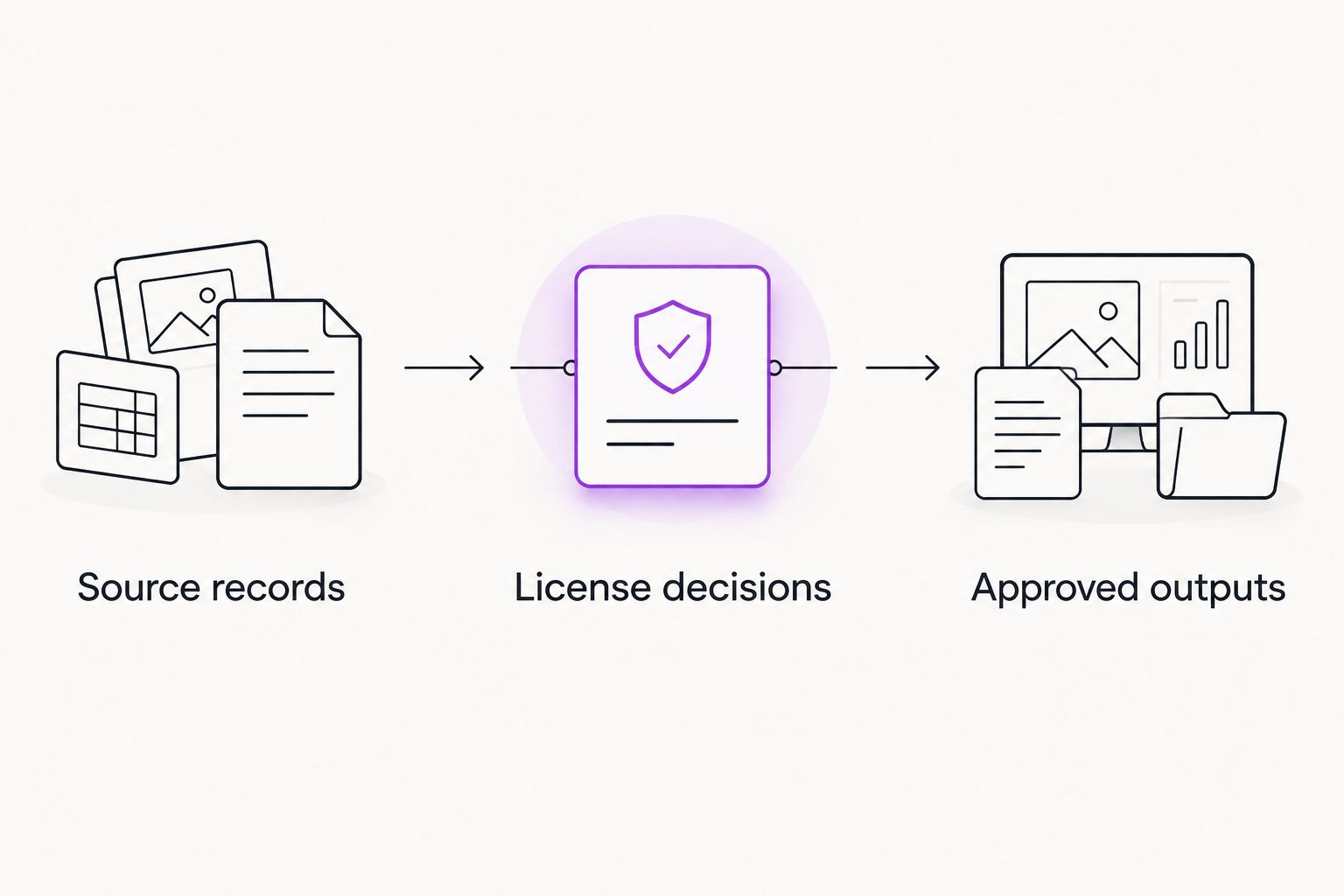
Evaluate the explanation behind the final report, not just the report itself.
Use 2 review gates: a technical review by the people responsible for collection and licensing, followed by a governance review by the people responsible for approvals and evidence. These are recommended evaluation controls, not product certifications or guarantees.
How the tools are ranked
This 2026 shortlist ranks tools by operational fit against the stated criteria: licensing scope, evidence traceability, control ownership, operational fit, and information governance. Each recommendation owns a different use case; the order is not a claim that one platform outperforms every other platform on every measure.
The comparison distinguishes stated product purposes from requirements you must verify. It does not assign security certifications, implementation times, savings figures, or regulatory approval to any vendor. Your procurement decision should rely on the demonstrated configuration and contractual scope.
Which SAM tool should you choose?
Choose the tool that completes your required licensing workflow, not the tool with the broadest presentation. Start with the obligation that currently lacks a reliable owner, evidence trail, or output.
- For Microsoft service-provider reporting and billing, prioritize the specialist SPLA option.
- For SAM embedded in established IT workflows, prioritize ServiceNow Software Asset Management.
- For mixed-vendor enterprise licensing, prioritize Flexera One IT Asset Management.
- For an unreliable inventory foundation, evaluate Lansweeper while defining the licensing process separately.
Before signing in 2026, document the acceptance criteria and assign responsibility for unresolved exceptions. A successful demonstration should show how your team reaches and approves the result—not simply display a finished dashboard.
Evaluate your SPLA reporting requirements
Review software and consulting for usage reporting, customer billing, and audit defense.
FAQ
What's the best software asset management tool for a regulated organization?
The best tool depends on your licensing obligations and required evidence. Octopus fits Microsoft SPLA partners; ServiceNow Software Asset Management fits workflow-led programs; Flexera One IT Asset Management fits mixed-vendor licensing.
Does a SAM platform make an organization regulatory-compliant?
No, a SAM platform does not establish regulatory compliance by itself. Your organization must define the applicable controls, approve decisions, and retain the required evidence.
Is Lansweeper enough for software license compliance?
Inventory alone is not enough for software license compliance. Lansweeper addresses discovery and inventory; your process must also connect those records to entitlements, licensing rules, and approved conclusions.
Is ServiceNow better than Flexera for software asset management?
Neither is the default winner for every organization. Prioritize ServiceNow Software Asset Management for alignment with established ServiceNow workflows and Flexera One IT Asset Management for a mixed-vendor licensing evaluation.
What should a regulated business ask a SAM vendor to demonstrate?
Ask the vendor to trace source records through licensing decisions to an approved output. Include an exception and a corrected source record so your reviewers can inspect how decisions change.
Should a Microsoft SPLA partner use the same tool as an internal IT team?
Not automatically: SPLA partners need to evaluate service-provider usage reporting and customer billing requirements. An internal enterprise SAM workflow does not establish support for those obligations.
What should be checked before selecting a SAM tool in 2026?
Check licensing scope, evidence traceability, control ownership, operational fit, and information governance. Verify the proposed configuration against your own reporting period and approval requirements.
One last thing
Ask the vendor to explain a result your licensing team deliberately challenges. Do not stop when the dashboard looks correct. The stronger acceptance test is whether your reviewers can trace, question, correct, and approve the result without losing the evidence behind it.