



Best for Microsoft SPLA licensing and customer billing: Octopus. Best for multicloud governance: CloudHealth. Best for engineering cost allocation: IBM Cloudability. This 2026 comparison of FinOps platforms for cloud service providers also covers CloudCheckr for managed-service reporting and AWS Billing Conductor for AWS billing groups.
TL;DR
- Octopus is the best fit among these FinOps platforms for cloud service providers managing Microsoft SPLA reporting and licensing compliance.
- CloudHealth fits multicloud governance; IBM Cloudability fits engineering cost allocation and accountability.
- CloudCheckr fits managed-service reporting; AWS Billing Conductor fits AWS-specific billing groups and pro forma charges.
- Evaluate customer allocation, licensing evidence, billing reconciliation, and export quality before selecting a platform.
Why this matters
A provider needs more than a cloud spending dashboard. You must connect infrastructure consumption to customer charges, distinguish internal cost from billable usage, and preserve the evidence behind each reporting decision.
Microsoft licensing adds a separate control problem. Cloud consumption records do not establish SPLA compliance, and a cost recommendation does not prove that a workload has the correct licensing treatment. Select the platform for the financial obligation you must control, not the dashboard you prefer.
What makes the best provider FinOps platform?
Use these criteria to evaluate your 2026 shortlist before comparing demonstrations:
- Customer allocation: Attribute shared and dedicated infrastructure to the correct customer, with an explicit treatment for unallocated usage.
- Billing separation: Distinguish underlying provider cost, customer charges, and adjustments. Check how exports support invoice reconciliation.
- Licensing evidence: For Microsoft hosting, connect reporting decisions to inventory, usage, customer context, and applicable licensing terms.
- Operational controls: Assign owners to exceptions and preserve the basis for changes. A recommendation without an accountable owner remains unfinished work.
- Portfolio fit: Match supported environments to your actual services. Multicloud breadth does not automatically solve Microsoft licensing requirements.
- Data portability: Inspect the underlying exports, not just charts. Your finance and compliance teams need records they can reconcile independently.
FinOps platforms at a glance
The order below follows distinct provider use cases rather than a universal feature score. No single platform replaces every billing, governance, and licensing control.
Octopus
- Best for: Microsoft SPLA partners and Authorized Outsourcers
- Standout capability: Software asset management, usage reporting, customer billing, and audit defense
- Key limitation: Not a substitute for evaluating broader multicloud cost-management requirements
CloudHealth
- Best for: Multicloud cost governance
- Standout capability: Cloud cost visibility, allocation, and policy-based governance
- Key limitation: Microsoft SPLA compliance requires a separate evaluation
IBM Cloudability
- Best for: Engineering cost allocation
- Standout capability: Cloud cost analysis organized around business and engineering ownership
- Key limitation: Cost allocation does not establish licensing compliance
CloudCheckr
- Best for: Managed-service cost reporting
- Standout capability: Cloud cost reporting alongside configuration and security checks
- Key limitation: Reporting still requires reconciliation to your customer billing rules
AWS Billing Conductor
- Best for: AWS billing groups and custom billing presentation
- Standout capability: Pro forma billing using configurable pricing rules
- Key limitation: AWS-specific; pro forma charges do not change the underlying AWS bill
1. Octopus: best for Microsoft SPLA licensing controls
This software asset management platform and consulting service supports Microsoft SPLA partners and Authorized Outsourcers. Its stated scope includes automating usage reporting, customer billing, and audit defense to support licensing compliance.
That makes it the most directly aligned option here when your financial exposure depends on Microsoft licensing decisions. Evaluate it against the reporting and evidence requirements of your hosting business, rather than treating it as an interchangeable cloud cost dashboard.
Octopus pros:
- Explicitly serves SPLA partners and Authorized Outsourcers.
- Connects software asset management with usage reporting and customer billing.
- Includes consulting services alongside the platform.
- Addresses audit defense as part of its stated service scope.
Octopus cons:
- Its stated specialization does not establish coverage for every multicloud optimization requirement.
- Platform selection does not remove your responsibility to validate licensing interpretations and reporting inputs.
Best for: Providers whose priority is controlling Microsoft licensing, customer reporting, and supporting evidence.
For a 2026 evaluation, bring a completed reporting period and representative customer records. Ask how discovered usage becomes a reportable quantity, how exceptions are resolved, and what evidence supports the final submission. Require the demonstration to follow your records rather than a prepared dashboard.
Verdict: Buy for Microsoft SPLA reporting and licensing controls after validating your reporting workflow.
2. CloudHealth: best for multicloud cost governance
CloudHealth provides cloud cost management and governance capabilities, including visibility, allocation, and policy-based controls. Its relevant use case is coordinating financial oversight across cloud environments rather than establishing Microsoft hosting licensing compliance.
Choose this evaluation path when your central problem is inconsistent ownership or governance across your cloud estate. The demonstration should show how a cost exception becomes an assigned operational action.
CloudHealth pros:
- Combines cloud cost visibility with governance capabilities.
- Supports allocation as part of financial management.
- Provides a policy-oriented approach to managing cloud environments.
CloudHealth cons:
- Effective allocation still depends on accurate account structures, metadata, and ownership rules.
- Cloud governance capabilities do not by themselves establish SPLA reporting correctness.
Best for: Providers prioritizing multicloud financial governance and consistent operating policies.
Ask CloudHealth to demonstrate a shared service that supports several customers. Inspect how allocation rules work, how ownership is represented, and what happens when the required metadata is absent. A report that hides unallocated consumption is not an acceptable billing control.
Verdict: Buy for multicloud governance when its allocation model matches your customer structure.
3. IBM Cloudability: best for engineering cost allocation
IBM Cloudability focuses on cloud financial management, including cost visibility, allocation, and optimization. Its strongest role in this shortlist is helping engineering and finance work from a common cost model.
That matters when teams understand infrastructure consumption but cannot connect it consistently to services or business owners. Start with ownership and allocation before assessing optimization recommendations.
IBM Cloudability pros:
- Supports cloud cost analysis and allocation.
- Provides a financial view of engineering resource consumption.
- Includes optimization capabilities within its cloud financial management scope.
IBM Cloudability cons:
- Allocation quality depends on the business mapping and metadata you supply.
- Cloud cost analysis is not a replacement for customer invoicing controls or licensing evidence.
Best for: Providers that need engineering teams to own and explain service-level cloud costs.
For your 2026 demonstration, select a customer-facing service with both dedicated and shared resources. Ask IBM Cloudability to show the allocation basis, identify costs without owners, and export the result. Finance should be able to explain the allocation without reconstructing it from screenshots.
Verdict: Buy for engineering cost accountability after proving the service-to-cost mapping.
4. CloudCheckr: best for managed-service reporting
CloudCheckr combines cloud cost management with configuration and security assessment capabilities. That combination makes it relevant when a managed-service team needs financial reporting alongside operational checks.
Evaluate the customer reporting workflow directly. A useful internal view is not automatically a suitable customer statement, and a cost report is not necessarily an invoice-ready record.
CloudCheckr pros:
- Brings cost reporting and configuration assessment into the same platform scope.
- Addresses cloud financial management needs relevant to managed-service operations.
- Adds security checks alongside financial visibility.
CloudCheckr cons:
- Customer reports still need reconciliation against your contractual billing rules.
- Configuration and security findings do not replace Microsoft licensing analysis.
Best for: Managed-service providers that want cloud cost reporting alongside operational assessment.
Ask CloudCheckr to produce an internal cost view and a customer-facing report from the same underlying period. Compare adjustments, allocation, and export fields. Confirm which controls are included in the proposed configuration rather than assuming every demonstrated capability belongs in your deployment.
Verdict: Buy for managed-service reporting if the customer outputs reconcile to your billing process.
5. AWS Billing Conductor: best for AWS billing groups
AWS Billing Conductor lets you organize accounts into billing groups and apply pricing rules to generate pro forma billing information. The distinction is essential: pro forma charges provide an alternative billing view; they do not change the underlying AWS bill.
This is a focused option for AWS-based providers that need customized charge presentation. It is not a multicloud governance platform or a Microsoft licensing management system.
AWS Billing Conductor pros:
- Uses AWS billing groups to organize account-level billing views.
- Supports pricing rules for pro forma charge calculations.
- Separates customized billing presentation from the underlying AWS charges.
AWS Billing Conductor cons:
- Its scope is AWS rather than a multicloud provider portfolio.
- Pro forma billing information still needs integration with your invoicing and reconciliation processes.
Best for: AWS-focused providers that need billing-group-based charge presentation.
Before selection, have finance trace a customer-facing amount back to both the configured pricing rule and the underlying AWS charge. Document the difference explicitly. Otherwise, teams risk comparing two valid but different billing views as if they should match.
Verdict: Buy for AWS pro forma billing; skip as a replacement for broader provider FinOps controls.
How the platforms were ranked
This 2026 ranking separates platforms by their stated function: Microsoft licensing controls, multicloud governance, engineering allocation, managed-service reporting, and AWS billing presentation. It does not claim a measured performance winner or equal functionality across those categories.
The selection criteria are customer allocation, billing separation, licensing evidence, operational controls, portfolio fit, and data portability. Use the ranking to choose a relevant evaluation path, then require evidence from your own operating records.
Run a provider-specific acceptance test
Use a 30-day pilot as a proposed evaluation window, not as a promised implementation timeline. Include 3 customer accounts with different allocation needs and reconcile 2 completed billing cycles where historical data is available. These are test-design recommendations, not industry benchmarks.
Establish scope
Choose a dedicated customer environment, a shared-service customer, and an account with a known reporting exception. Record the expected output for each before loading the data. This prevents a polished demonstration from defining the acceptance criteria after the fact.
Map usage
Trace resource records to customers, services, and reporting categories. Keep unmatched records visible. For Microsoft workloads, separately document the licensing interpretation rather than treating a cloud resource label as sufficient evidence.
Reconcile charges
Compare platform outputs with source consumption records and your approved billing rules. Distinguish underlying cost, allocated cost, and customer charge. Investigate unexplained differences before accepting a total simply because it looks plausible.
Preserve evidence
Export the records, assumptions, and exception decisions behind the result. Have someone outside the implementation team reproduce the reconciliation. Your acceptance test should establish whether the output remains understandable without the demonstrator present.
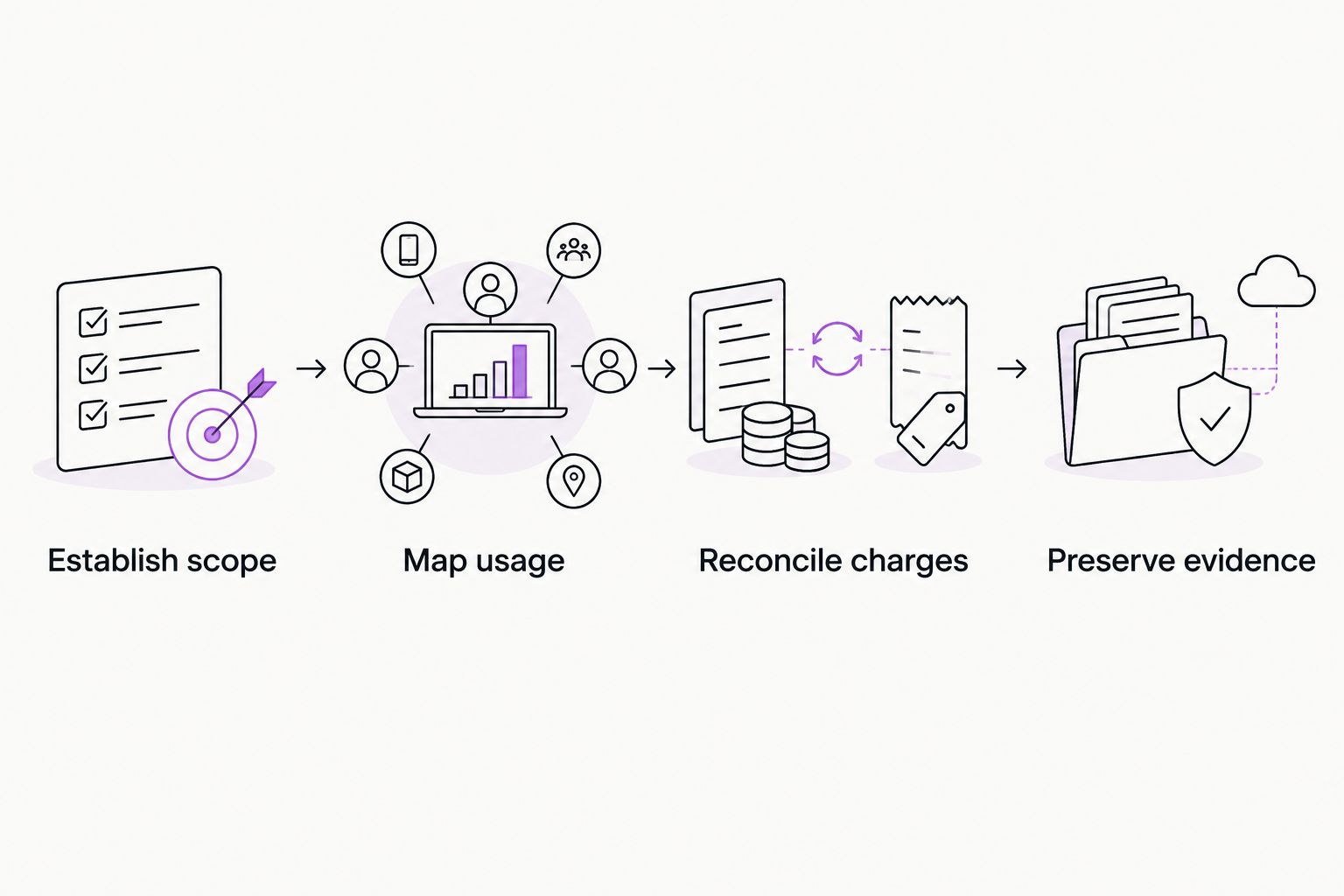
Accept a platform only after its outputs reconcile to your records and approved rules.
Which platform should you choose?
Octopus is the best fit in this shortlist for Microsoft SPLA partners that need usage reporting, customer billing, and audit defense. Start there when Microsoft licensing is the controlling requirement, then evaluate any additional cloud governance needs separately.
Choose CloudHealth for multicloud governance, IBM Cloudability for engineering allocation, CloudCheckr for managed-service reporting, or AWS Billing Conductor for AWS pro forma billing. In 2026, the decisive question is still whether your team can explain and reproduce the numbers sent to customers and licensing stakeholders.
Evaluate your SPLA reporting controls
Assess usage reporting, customer billing, and audit defense against your Microsoft licensing requirements.
FAQ
What's the best FinOps platform for a cloud service provider?
The best platform depends on the obligation you need to control: licensing, governance, allocation, reporting, or billing presentation. Select a platform against your customer structure and prove its outputs with a reconciliation test.
Is CloudHealth better than IBM Cloudability?
Choose CloudHealth for a governance-led evaluation and IBM Cloudability for an engineering-allocation-led evaluation. Compare both against the same customer records and acceptance criteria rather than assuming either wins every use case.
Does a FinOps platform prove Microsoft SPLA compliance?
A cloud cost dashboard alone does not prove SPLA compliance. You need applicable licensing terms, reliable inventory and usage records, reporting decisions, and evidence that supports those decisions.
Does AWS Billing Conductor change the AWS bill?
AWS Billing Conductor produces pro forma billing information; it does not change the underlying AWS bill. Reconcile the customized charge view separately from the actual AWS charges.
Can a provider use more than one FinOps platform?
Yes, a provider can separate licensing controls from cloud cost governance. Define which system owns each calculation and reconcile the handoffs so that competing records do not become competing sources of truth.
What should a provider test before buying a FinOps platform?
Test customer allocation, shared costs, billing adjustments, reporting exceptions, and evidence exports. Require finance and operations to reproduce the result from the exported records.
Can cloud cost reports be used directly as customer invoices?
Use a cloud cost report as an invoice source only after reconciling it to your customer billing rules. Underlying provider cost, allocated cost, and contractual customer charges are different financial measures.
One last thing
Ask every shortlisted vendor to show the unmatched records before showing the savings dashboard. Unassigned consumption and unresolved exceptions reveal whether the platform supports a controlled reporting process or merely presents the records it already understands.
Make exception visibility an acceptance condition. Your team needs to explain what remains unresolved as clearly as it explains the final total.


